


Case Study
T.E.D.O. Restaurant Operations: Order Management
Contents
The Client
Imagine a restaurant with no tables. Just a commercial kitchen, operated by ~20 cooks, that churns out thousands of meals every single day, from 8am to 2am.
Now imagine those same 20 cooks making those thousands of meals for 30 different restaurants across a dozen different cuisines.

That describes this (unfortunately confidential) client perfectly. A pioneer in the T.E.D.O. (tech-enabled, delivery-only) restaurant space, our client operates 30 different restaurant brands (and counting) — all of which are available only on your favorite delivery apps. Their restaurants span a variety of cuisines (think sushi, ramen, burgers, breakfast, Thai, and so much more), and only the savviest of customers would have any inkling that all of this delicious food is coming out of a single kitchen.
And, before you doubt the quality, bear in mind that each cuisine is spearheaded by a head chef, often of Michelin Star caliber. The food is good, and it's crafted to be delivered directly to your door.
The Challenge
Creating the world's most efficient, technology-enabled kitchen.
Building a kitchen to support a staff of 20-30, operating in shifts for 18 hours every day, is no easy feat. Ensuring that kitchen runs smoothly is equally challenging. Then add the need to manage predictable inventory, support growth, launch new dishes and brands, ensure food service standards are upheld, and—most importantly—that customers love the food. All of these needs turn "food prep" into an intense orchestra that must be conducted flawlessly, every day.
Enter technology. The first step in enhancing the client's kitchen operations focused on highly granular management of the tickets that are distributed automatically to each cook station in the kitchen, as orders flow in across multiple platforms.
The Plan
Streamline the distribution of inbound orders across the kitchen stations.
Imagine you've ordered a burger, a side of fries, a beverage, and a cookie. The burger gets cooked at the grill station, the fries at the fry station, and the beverage and cookie are added at the expo station where the order is prepped for delivery. Prior to our project, each of those stations would receive the same exact printout, forcing the cook to scan the ticket to identify and track which portion was relevant to them.
Our goal was to ensure that order tickets printed only at the necessary kitchen stations, each with a layout that reflects the needs of that order at that particular station.
The Solution
Redesigned, station-specific tickets...
To solve this issue, the Apollo 21 team conducted an iterative design and user testing process on the tickets themselves to ensure:
- All of, and only, the necessary data shows up on the station tickets.
- Station-relevant information sits at the top of the tickets for easy scan-ability.
- Ticket designs are station-specific with variation between cook stations and the expo station.
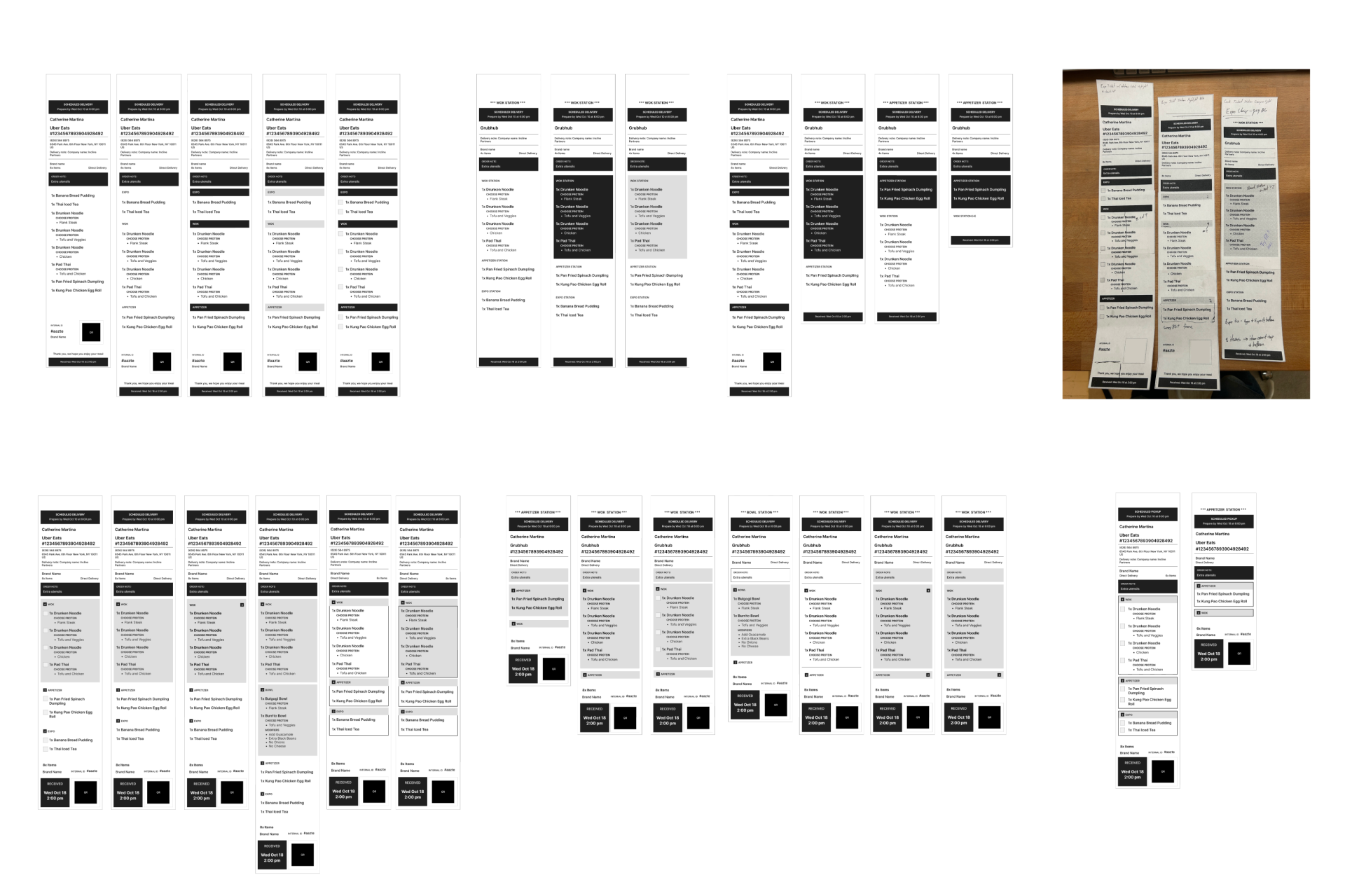
Custom middleware, designed to act as an "Air Traffic Control" system for the distribution of inbound orders...
Once the ticket designs were finalized, the Apollo 21 team built a piece of custom middleware. This application gathered all inbound orders from across the various delivery apps, inserted requisite information from each order, and distributed our newly designed tickets to precisely the right cook stations in the kitchen, ensuring that cooks know exactly where to look to find the information relevant to them.
Accomplishing this unique software build required the team to integrate multiple APIs from various ordering sources, as well as the existing software system through which orders are aggregated. The effort also required substantial exploratory development to learn the limitations of the commercial Epson printers supplied by existing software partners and overcome the provider-installed firmware to enable the printing of tickets according to the approved design. Ultimately, this effort required the enhancement of an open-source printing library with our own custom modifications to attain the desired output.
Once complete, the new middleware was put to the test outside of the kitchen to ensure reliability—any breakdown in the printer system would immediately cause business to grind to a halt until rectified. To accomplish the necessary testing, the printer system was set up to mimic the kitchen environment with a printer reflecting each station, allowing both teams to monitor the output consistently.
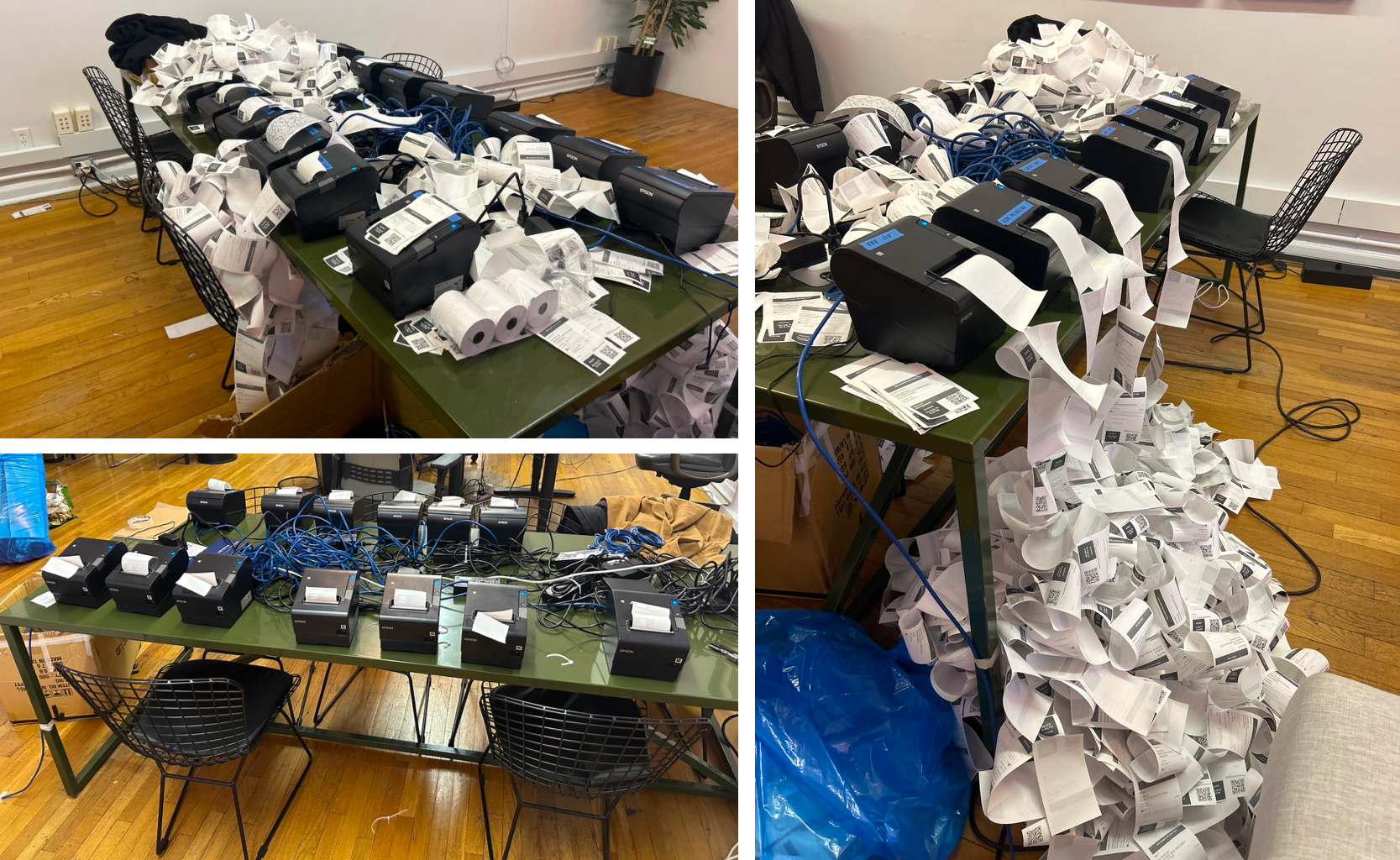
The Outcomes
- Decreased average order fulfillment time by nearly two minutes.
- Reduced mistakes in order preparation by nearly one percent.
- Increased station capacity and throughput.
In Their Own Words
Work With Us
Sound like a process that works for you?
Book Your Free 1-Hour Work Session