


Case Study
T.E.D.O. Restaurant Operations: Kitchen Display System
Contents
The Client
Imagine a restaurant with no tables. Just a commercial kitchen, operated by ~20 cooks, that churns out thousands of meals every single day, from 8am to 2am.
Now imagine those same 20 cooks making those thousands of meals for 30 different restaurants across a dozen different cuisines.
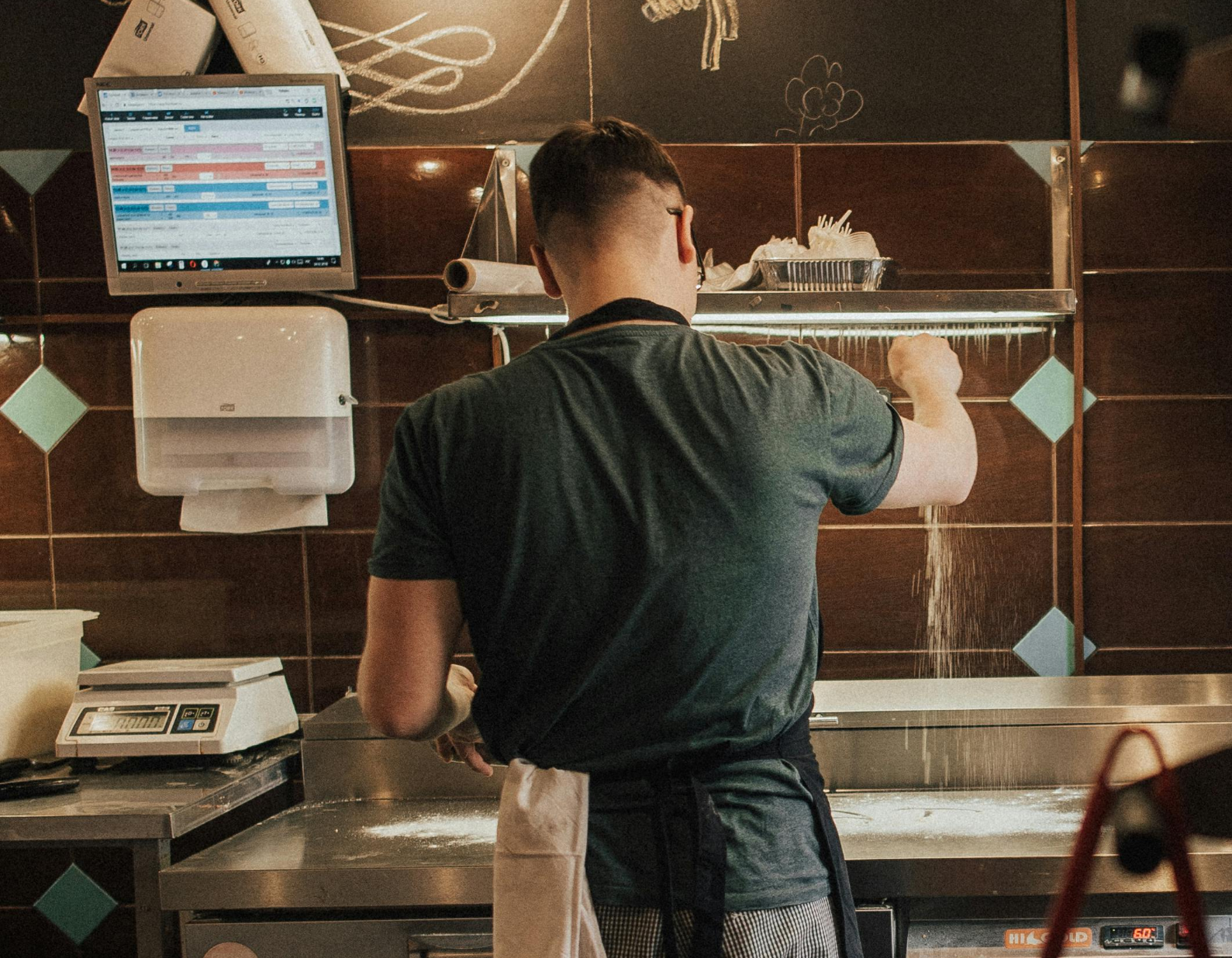
That describes this (confidential) client perfectly. A pioneer in the T.E.D.O. (tech-enabled, delivery-only) restaurant space, our client operates 30 different restaurant brands (and counting) — all of which are available only on your favorite delivery apps.
Their restaurants span a variety of cuisines (think sushi, ramen, burgers, breakfast, Thai, and so much more), and only the savviest of customers would have any inkling that all of this delicious food is coming out of a single kitchen.
And, before you doubt the quality, bear in mind that each cuisine is spearheaded by a head chef, often of Michelin Star caliber. The food is good, and it's crafted to be delivered directly to your door.
The Challenge
Creating the world's most efficient, technology-enabled kitchen.
Building a kitchen to support a staff of 20-30, operating in shifts for 18 hours every day, is no easy feat. Ensuring that kitchen runs smoothly is equally challenging. Then add the need to manage predictable inventory, support growth, launch new dishes and brands, ensure food service standards are upheld, and—most importantly—that customers love the food.
All of these needs turn "food prep" into an intense orchestra that must be conducted flawlessly, every day.
Enter technology.
Often seen in high-traffic fast food restaurants, a Kitchen Display System (KDS) is a digital touchscreen application that enables kitchen staff to conduct that orchestra with greater communication and fewer paper tickets.
The Plan
Streamline kitchen operations through the use of a Kitchen Display System.
After spending months searching for an off-the-shelf KDS system that would suit their needs, our client finally came to terms with the fact that their perfect solution simply didn't exist. The unique combination of features that would streamline operations within their kitchens demanded a choice between compromising with off-the-shelf software, or building their own KDS system.
Collectively, we decided on the latter.
The Solution
Build a bespoke KDS system designed explicitly around the needs and operations of the client's kitchen.
The feature set that proved so difficult to find through an existing KDS platform included:
- The display of inbound order counts, broken out by dishes in prep/cooking and all day counts.
- Custom timers for specific dishes.
- The ability to request batch orders from other stations.
KDS Dashboard
Our bespoke KDS is designed to put as much relevant information front-and-center as possible while allowing the cooks to tap into specific sections to create a more detailed view.
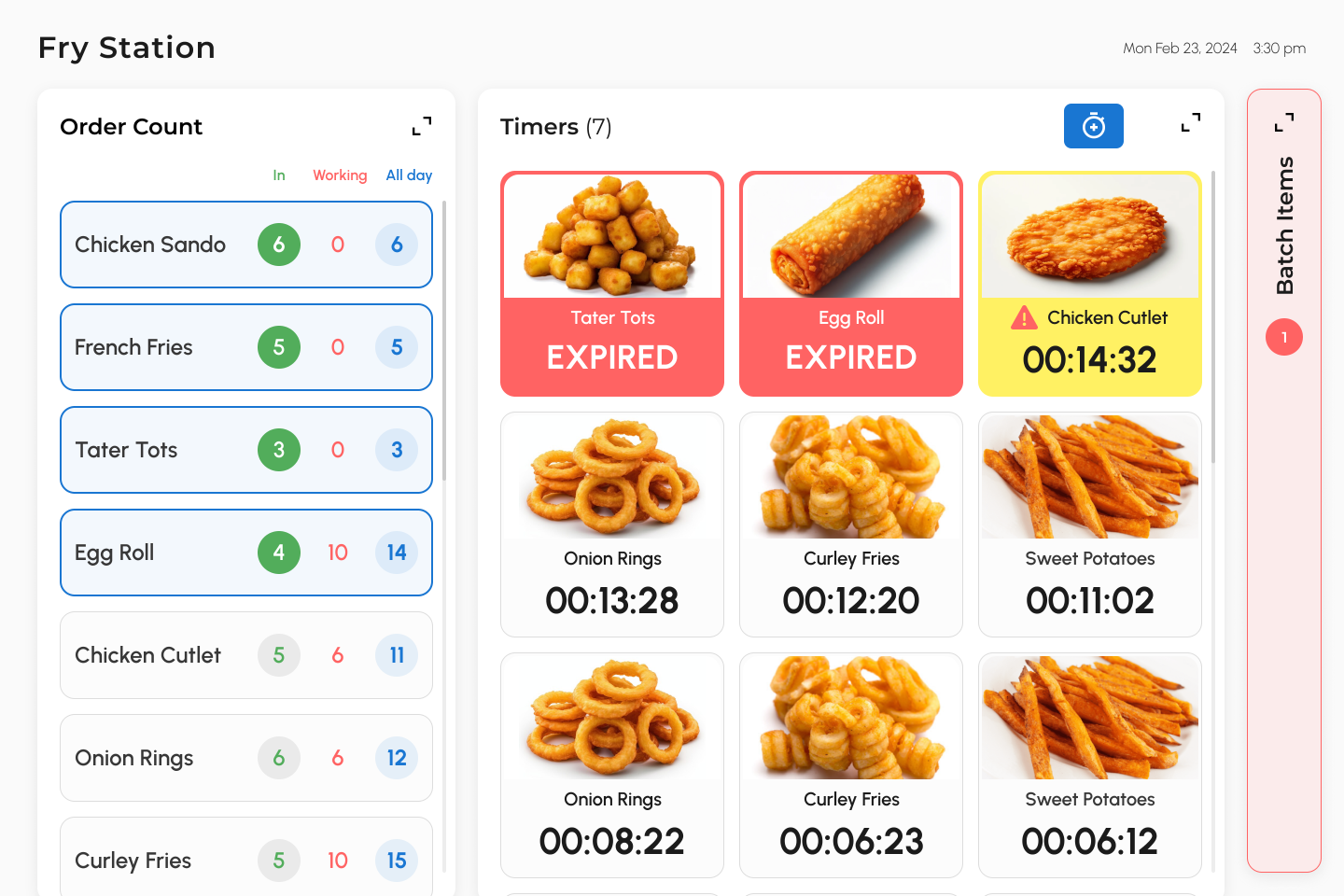
Inbound Order Management
Inbound orders are broken down by station-specific items and enumerate:
- The total number of orders for that item.
- The number of working items (in prep) for that item.
- The "all day" count per item.

Item Timers
To ensure the perfect dish for every order, the KDS system includes a custom timer that can be managed on a per-item basis. Timers are designed to accommodate a "waterfall" cooking process whereby each item displays a total cook time as well as intermediate action alerts that notify the cook to flip/stir/check an item at specified intervals.

Item Batch Requests
Some items within the kitchen need to be prepped at one station so they can then be fulfilled/utilized by another station. (For example, a rice bowl with Chicken Katsu is prepared at the bowl station but the Katsu is made at the fry station and then sent to the bowl station to be added to the order.)
To accommodate this workflow, we created the ability for cooks to batch-request items when they are running low. With a couple of taps on the KDS, the bowl station can notify the fry station that they're running low on Chicken Katsu and request a fresh batch be cooked.

The Outcomes
The KDS as shared above is effectively the MVP for this robust operational platform. Outcomes at the MVP stage include:
- Streamlined communications within the kitchen.
- Increased prep efficiency.
- Limited waste due to miscounts.
- Just-in-time ingredient replenishment.
As the system grows, it will also include:
- Inbound order display (replacing paper tickets).
- Waste and re-fire reporting.
- Inventory display and management.
In Their Own Words
Work With Us
Sound like a process that works for you?
Book Your Free 1-Hour Work Session